
The Future of Call Centre Technology and Outsourcing Trends You Should Know.

Updated: Jul 9, 2025

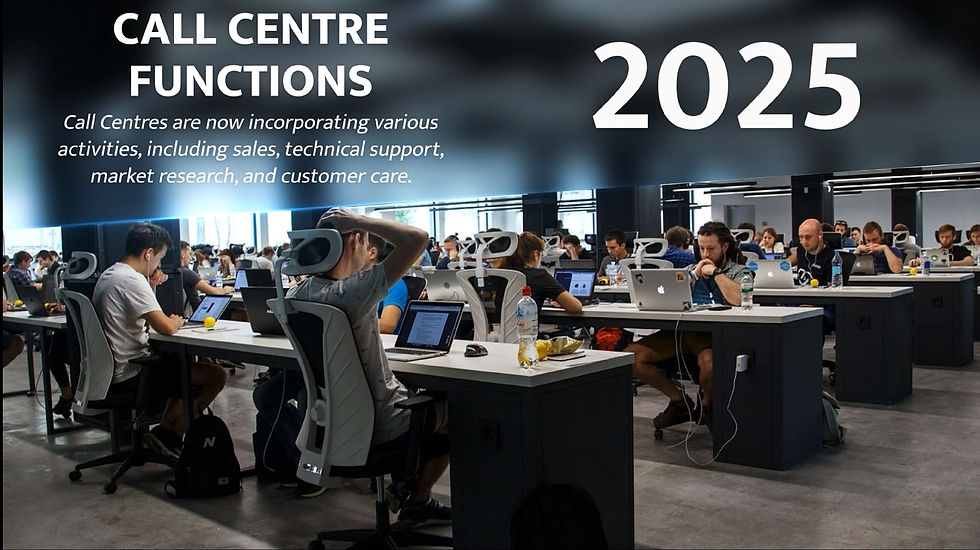
Diversification of Call Centre Functions: Call centres have evolved beyond basic customer service to encompass a wide range of activities including sales, technical support, market research, and proactive customer engagement.
Technological Advancement: Technology, especially AI, cloud computing, and integrated platforms, is fundamentally reshaping how call centres operate, leading to improvements in efficiency, personalization, and analytical capabilities.
Evolution from Call Centres to Contact Centres: The industry is transitioning towards a more comprehensive "contact centre" model that incorporates multiple communication channels beyond just voice.
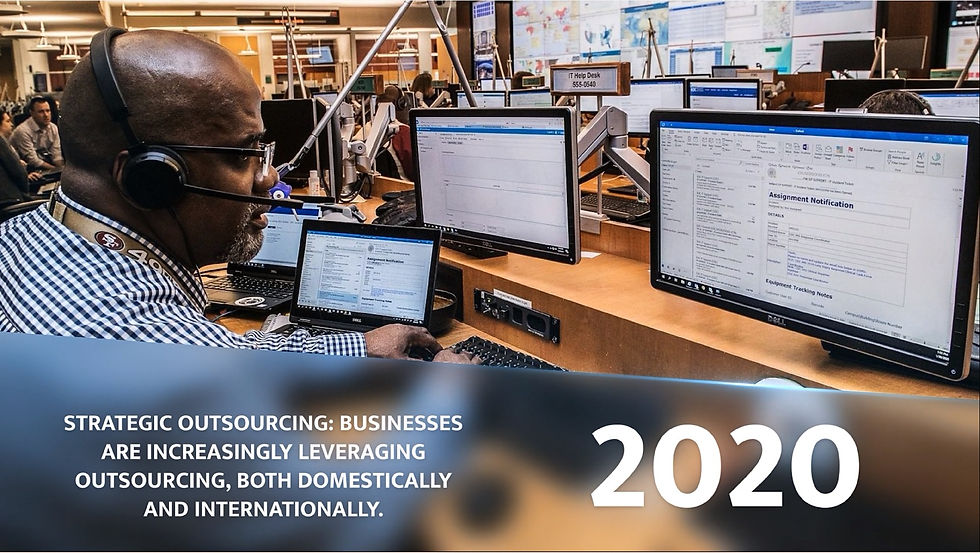
Strategic Outsourcing: Businesses are increasingly utilizing outsourcing, both domestically and internationally, to reduce costs, access specialized skills, and scale operations.

Most Important Ideas and Facts:
1. Defining and Categorizing Call Centres:
A core definition of a call centre is "a dedicated facility where agents handle customer interactions primarily over the phone. It involves specialized technology and software applications designed to efficiently manage inbound and outbound calls.” The evolution of customer interaction has led to the development of distinct call centre types, each with specific functions and technological needs:
Inbound Call Centers: Handle incoming calls for support, service, or product inquiries, relying on features like auto attendants, IVR systems, and call queues.
Outbound Call Centre: Initiate contact for sales, lead generation, market research, and proactive service, often using dialler software.
Blended Call Centres: Combine both inbound and outbound functionalities, requiring robust strategy and agent training.
Virtual Call Centres: Leverage cloud technology for geographically dispersed agents, offering flexibility and scalability.
Multichannel Contact Centres: Provide support across various channels (phone, email, chat, social media), though channels may operate independently, potentially leading to a fragmented customer journey.
Omnichannel Contact Centres: Offer an integrated approach, connecting all channels on a single platform to provide agents with a complete view of customer history and enabling seamless transitions between channels for a superior customer experience.
Automated Call Centres: Integrate AI technologies like chatbots, NLP, and speech recognition to automate repetitive tasks and personalize interactions. While AI handles routine tasks, complex or empathetic interactions often still require human agents.
In-house Call Centres: Offer greater control over brand representation and agent training but require significant infrastructure and staffing investment.
Outsourced Call Centres (BPO): Involve contracting with external providers, offering cost savings and scalability, but potentially less direct control over quality and branding.
Offshore Call Centres: A type of outsourced call centre located in foreign countries, often for significant cost savings and 24/7 capabilities, but can present challenges with cultural differences, language barriers, and time zones.
2. The Importance of Technology and Integrated Platforms:

Call centre software is crucial for efficient operation, featuring "automatic call distribution, interactive voice response (IVR) systems, and intelligent call routing tailored to handle various customer transactions.” Integration with Customer Relationship Management (CRM) systems is essential for providing agents with "easy access to customer information and a smooth telecommunications experience."
The shift towards "Contact centres aim to provide a seamless, omnichannel customer experience, so customers can easily switch between different communication channels." AI is a transformative technology in call centers, with capabilities including:
Generative AI Knowledge Base
Speech to Text Transcription
Sentiment Analysis
AI Classification
Language Detection & Translation
Data Loss Prevention
Text-to-Speech
AI Voice & Digital Bots
Secure Payment Assist
Intelligent Virtual Assistant
Platforms like Nextiva Unified-CXM aim to bring "all customer interactions into one AI-powered platform for orchestrated customer journeys that acquire, retain, and grow customers."
3. The Trend of Outsourcing to South Africa:
A major driver for UK businesses outsourcing call centres to South Africa is to "reduce costs." The cost difference is significant, with the average call centre agent cost in South Africa being substantially lower than in the UK. "That is a saving of £11,766.02 per agent making it a huge cost-saving opportunity for call centres."
Several factors contribute to South Africa's attractiveness as an outsourcing destination:
Data Protection Laws: South Africa's data protection laws are often "based on what’s been set in the UK," which is beneficial for maintaining compliance.
Telecommunications Infrastructure: South Africa possesses "the best [telecommunications] infrastructure in the continent with a network that is 99.9% digital and includes the latest in fixed-line, wireless, and satellite communication." (quoting Everest Group)
Language and Empathy: "English is the main language used in government and business according to SouthAfrica.com. Although it’s not the most popular language in South Africa, English is widely spoken throughout the country." This, coupled with a perceived ability of South Africans to show "high levels of empathy with callers," makes it an attractive location for customer-facing roles.
Time Difference: The time difference between the UK and South Africa is minimal (1 hour), facilitating communication and management.
Established Trend: "73% of services provided to other countries [from South Africa] are for call centres. 78% of all services are provided to the UK." (quoting Everest Group) This highlights the established nature of this outsourcing trend.
4. VEONA Outsourcing as an Example of a Service Provider:
VEONA is highlighted as an example of a service provider, emphasizing their focus on "Customer Service" and a "customer-based approach." They explicitly offer "Inbound and Outbound Sales" services, utilizing "expertly trained agents." Their "Global Business Services" focus on lead generation, qualification, nurturing, and conversion, with a core emphasis on "qualified prospects and a higher return on investment."
Conclusion:
The provided source depicts a dynamic and technologically evolving call centre industry. Businesses have a wide range of options for call centre models, driven by their specific needs and goals, including customer interaction types, desired level of control, and budget. Technology is central to enabling efficient and personalized customer experiences, with a clear shift towards integrated, omnichannel platforms enhanced by AI. Outsourcing, particularly to locations like South Africa, is a significant trend driven by cost savings, infrastructure availability, and language/cultural compatibility. Companies like VEONA demonstrate the range of services offered by outsourcing providers in this landscape.


Comments